Grape Nutrition Facts,
Health Benefits of Grapes
Everything on grape juice, raisins and grapes nutrition, grape nutrition fact, health benefits of grapes
Grape varieties are generally split between those we eat, those grown for wine, and varieties used for dried fruit (raisins). Grapes are very low in calories, about 69 calories per 100g serving. They are also very low in fat and contain no cholesterol.
Raisins and grapes provide us with fiber, potassium, manganese and vitamins A, B and C. They also provide one of the best sources of phosphorus. As part of your weight loss diet, eat grapes and raisins as a snack in between meals to keep your hunger at bay.
Drying out the fruit, or the dehydration process, creates a nutrient dense raisin, thought to help purify our blood. Their fiber gives us a healthy heart and bowel function.
Grapes are full of flavonoid antioxidants, thought to help protect against cardiovascular disease, act as an ant-inflammatory, lower bad cholesterol (LDL), boost our immune system and help regulate our blood sugar levels – grapes contain 15g of sugar per 100g serving.
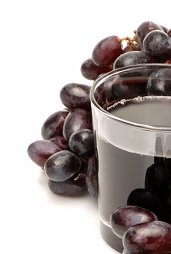
They contain ellagic acid believed to inhibit some cancers. Grapes also contain reservatrol, thought to slowdown the aging process and help us live longer. The seeds in grapes are antioxidant rich, so try not to throw them away.
Grapes should be kept refrigerated to maintain their freshness. Rinse thoroughly before eating to remove any chemical residue.
Compare grape nutrition facts to the other fruits.
Nutritional Value of Grapes, Grape Juice and Raisins (Dried Grapes)
| Grape nutritional value per 100 g (3.5 oz) Refuse: 4% (Stems) Scientific Name: Vitis vinifera |
|||
|---|---|---|---|
| Proximates: | |||
| Nutrients | Grapes, red or green (European type, such as Thompson seedless), raw | Grape juice, canned or bottled, unsweetened, without added ascorbic acid | Raisins, seedless |
| Water | 80.54 g | 84.51 g | 15.43 g |
| Energy | 288 kJ (69 kcal) | 252 kJ (60 kcal) | 1252 kJ (299 kcal) |
| Protein | 0.72 g | 0.37 g | 3.07 g |
| Carbohydrates | 18.10 g | 14.77 g | 79.18 g |
| Total Fat: | 0.16 g | 0.13 g | 0.46 g |
| Fiber | 0.9 g | 0.2 g | 3.7 g |
| Cholesterol | 0 mg | 0 mg | 0 mg |
| Minerals: | |||
| Calcium, Ca | 10 mg (1 %) | 11 mg (1%) | 50 mg (5%) |
| Iron, Fe | 0.36 mg (2 %) | 0.25 mg (1%) | 1.88 mg (10%) |
| Magnesium, Mg | 7 mg (2 %) | 10 mg (3%) | 32 mg (8%) |
| Phosphorus, P | 20 mg (2 %) | 14 mg (1%) | 101 mg (10%) |
| Potassium, K | 191 mg (4 %) | 104 mg (3%) | 749 mg (21%) |
| Sodium, Na | 2 mg (0.09 %) | 5 mg (0%) | 11 mg (0%) |
| Zinc, Zn | 0.07 mg (0.5 %) | 0.07 mg (0%) | 0.22 mg (1%) |
| Copper, Cu | 0.127 mg (6 %) | 0.018 mg (1%) | 0.318 mg (16%) |
| Manganese, Mn | 0.071 mg (4 %) | 0.239 mg (12%) | 0.299 mg (15%) |
| Selenium, Se | 0.1 mcg (0.1 %) | 0 mcg | 0.6 mcg (1%) |
| Vitamins: | |||
| Vitamin C | 3.2 mg (6 %) | 0.1 mg (0%) | 2.3 mg (4%) |
| Thiamine (Vit. B1) | 0.069 mg (5 %) | 0.017 mg (1%) | 0.106 mg (7%) |
| Riboflavin (Vit. B2) | 0.070 mg (4 %) | 0.015 mg (1%) | 0.125 mg (7%) |
| Niacin (Vit. B3) | 0.188 mg (1 %) | 0.133 mg (1%) | 0.766 mg (4%) |
| Pantothenic acid (B5) | 0.050 mg (0.5 %) | 0.048 mg (0%) | 0.095 mg (1%) |
| Vitamin B6 | 0.086 mg (4 %) | 0.032 mg (2%) | 0.174 mg (9%) |
| Folate (Vit. B9) | 2 mcg (0.5 %) | 0 mcg | 5 mcg (1%) |
| Vitamin A | 66 IU (1 %) | 8 IU (0%) | 0 IU |
| Vitamin K | 14.6 mcg (18 %) | 0.4 mcg (1%) | 3.5 mcg (4%) |
| Percentages are relative to US Recommended Daily Intake (RDI) for adults. | |||
Author: Lana Soko
You Might Also Like:


Like This Page?
|
Share This Page:
|

Search Our Site:

Free E-Book:

|
Join the newsletter and get a free welcome pack! |
 |
HOME Privacy Policy Disclaimer Contact Us
Copyright © 2023 Lose-Weight-With-Us.com. All rights reserved.
