Atkins Diet Plan
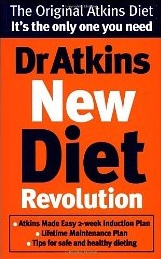
The Atkins Diet plan was first published back in 1992 by Dr Robert C Atkins and is probably one of the most well known and controversial diets. Dr Atkins received his medical doctorate from Cornell University Medical School and like a number of other doctors who have formulated diets, was a cardiologist.
The aims of the Atkins Diet are to eventually move you to a diet that you permanently follow which he claims will give you more energy, will retain your weight loss unlike a number of fad diets where you end up putting the weight back on, provides you with weight loss without the need to count those dreaded calories, and most importantly, allows you to live a fulfilling, long, healthy life.
So to be clear, the Atkins Diet plan is a diet for life, not a 1 week, or 1 month or a 1 year diet, it’s permanent.
What is the Theory Behind the Atkins Diet Plan?
Dr Atkins claims to transform your stored body fat from being a backup fuel source where you are carrying excess fat that’s not required, to an efficient primary fuel source, resulting in weight loss to give you a healthy body. This occurs by removing bad carbohydrates from your diet – in fact a large number of diets we have reviewed all conclude that by removing bad carbohydrates from your diet, re-balances your blood sugar levels, allowing for weight loss as you will no longer have those sugar cravings and feel hungry very quickly after eating. The difference though is that at the start of the diet, a major amount of carbs are entirely removed from your diet, not just simply replaced by good carbs. Additionally, Atkins does controversially claim that you can eat fat and not to obsess about low fat diets.
What are the Atkins Diet Phases?
The diet is split into four phases. Everyone has to start from the first phase and work through to the last phase which continues forever.
Phase 1 is the Atkins diet induction plan, which allows for 20g of carbs per day. Now when we talk about carbs, these aren’t any carbs. These carbs are specific and his book will go into a lot of detail about which carbs are permitted. This phase will transition your body, as mentioned above, so it will use your existing body fat as the primary fuel source. This phase is where the major weight loss occurs.
The second phase continues the fat burning mode and you are now allowed to add back in an additional 5g of carbs each week. Your weight loss will slow down as you eat additional carbs each week to the point where you are losing 1 to 2 pounds a week (which is the normal rate of weight loss). At this stage you maintain the existing amount of carbs until you have 10 pounds of weight left to reach your target weight loss goal.
Now you enter Phase 3. Add an additional 10g of carbs and keep adding an additional 10g of carbs every 1-2 weeks. The weight loss will continue, but will slow. Now your body needs to reach the optimum number of carbs. If at any stage the weight loss stops, reduce the carbs being eaten by 5g and keep going until you reach your target weight. You remain on phase 3 for a further month once you are at your target weight.
The last phase sees you having reached your target weight and it’s remained stable for a month. Theoretically the diet is now over, but of course this last phase continues forever. You’ve learnt what to eat and that is to be maintained.
Atkins Diet Results
Atkins Diet problems were highlighted in 2007, when the University of Maryland Medical Center compared the Atkins Diet with the South Beach Diet and concluded that nutritionally, the South Beach diet was better. They also challenged the fact that you can lose weight with no calorie restriction and questioned both the fats that were permitted and whether a low carb diet was really the answer.
More positive Atkins Diet research was published in 2007 by the Stanford School of Medicine which concluded that after a year of more than 300 ladies following one of four diets, including the Atkins Diet, the Atkins Diet plan provided the greatest benefit in terms of weight loss, blood pressure and cholesterol levels. The study adds though that as it was only a 12 month study, it cannot say what the long term effects of the diet are.
Top Selling Books on Amazon about Atkins Diet
You Might Also Like:



Want to Learn More?
Like This Page?
|
Share This Page:
|

Search Our Site:

Free E-Book:

|
Join the newsletter and get a free welcome pack! |
We Recommend:
Looking to get your body into great shape? Get the very best results for your efforts and money! Save your valuable time from surfing the internet. These are theBestselling Weight Loss Programs

Programs that work and have thousands of satisfied customers worldwide!
 |
HOME Privacy Policy Disclaimer Contact Us
Copyright © 2023 Lose-Weight-With-Us.com. All rights reserved.
