Cranberry Nutrition Facts,
Health Benefits of Cranberries
All about cranberry nutrition, cranberry juice and cranberry sauce nutrition,nutritional benefits of cranberries and cranberry juice
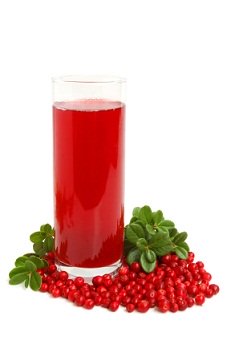
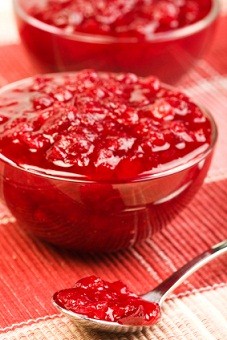
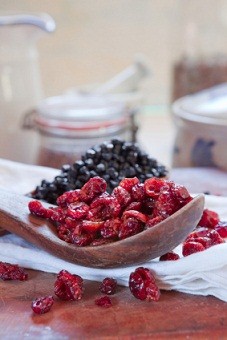
The cranberry is an interesting fruit. It’s packed with powerful antioxidants and ranked second to the Acai Berry in the US Depart of Agriculture’s (USDA) ORAC table, which is a measure of the fruits antioxidant capacity. But hold on, can you honestly say you can eat a bowl of fresh cranberries; they are, after all, very bitter. So most people consume cranberries either as juice, as dried cranberries for a snack, or possibly as a sauce for an accompaniment to meat.
Probably the most popular form of consumption is juice, but unfortunately you are missing out on all the goodness and phytonutrients removed in the juicing process, i.e. the skin and pulp.
Below we’ve compared the nutrient value of fresh cranberries against, the dried variety and juice, one sweetened the other unsweetened. As you can see in the unsweetened version cranberries are very low in both fat and calories, with just 46 calories per serving (100g or 3.5oz). The sweetening process will boost the calorie levels.
Cranberries in their dried or raw form are full of fiber, and therefore great for our digestion and bowels. The antioxidant power in cranberries is believed to help protect against cardiovascular disease, lower bad cholesterol, boost our immune systems and act as an anti-inflammatory. Cranberries are also a good source of both vitamins E and K. They are also thought to help protect against urinary tract infections and in addition their iodine content makes them a good medicine for an underactive thyroid.
So the dilemma, sweetened or unsweetened, juice or dried. Try unsweetened every time. How about a no-sugar cranberry cocktail using fresh cranberries, non-fat yoghurt and a spoon of honey. Just mash up the cranberries retaining all their goodness and blend. Dried cranberries mix with other dried fruits such as raisins, apricots and some fresh nuts as a healthy snack food.
Compare cranberry nutrition facts to the other fruits.
 |
 |
 |
Cranberry Nutritional Information
| Cranberry nutritional value per 100 g (3.5 oz) Scientific Name: Vaccinium macrocarpon |
||||
|---|---|---|---|---|
| Proximates: | ||||
| Nutrient | Cranberries, raw | Cranberries, dried, sweetened | Cranberry juice, unsweetened | Cranberry sauce, canned, sweetened |
| Water | 87.13 g | 16.00 g | 87.13 g | 60.65 g |
| Energy | 194 kJ (46 kcal) | 1289 kJ (308 kcal) | 194 kJ (46 kcal) | 632 kJ (151 kcal) |
| Protein | 0.39 g | 0.07 g | 0.39 g | 0.20 g |
| Carbohydrates | 12.20 g | 82.36 g | 12.20 g | 38.90 g |
| Total Fat: | 0.13 g | 1.37 g | 0.13 g | 0.15 g |
| Fiber | 4.6 g | 5.7 g | 0.1 g | 1.0 g |
| Cholesterol | 0 mg | 0 mg | 0 mg | 0 mg |
| Minerals: | ||||
| Calcium, Ca | 8 mg (1%) | 10 mg (1%) | 8 mg (1%) | 4 mg (0%) |
| Iron, Fe | 0.25 mg (1.4%) | 0.53 mg (3%) | 0.25 mg (1.4%) | 0.22 mg (1%) |
| Magnesium, Mg | 6 mg (2%) | 5 mg (1.3%) | 6 mg (2%) | 3 mg (1%) |
| Phosphorus, P | 13 mg (1.3%) | 8 mg (1%) | 13 mg (1.3%) | 6 mg (1%) |
| Potassium, K | 85 mg (2%) | 40 mg (1%) | 77 mg (1.6%) | 26 mg (1%) |
| Sodium, Na | 2 mg (0.1%) | 3 mg (0.1%) | 2 mg (0.1%) | 29 mg (1%) |
| Zinc, Zn | 0.10 mg (1%) | 0.11 mg (1%) | 0.10 mg (1%) | 0.05 mg (0%) |
| Copper, Cu | 0.061 mg (3%) | 0.08 mg (4%) | 0.055 mg (3%) | 0.020 mg (1%) |
| Manganese, Mn | 0.360 mg (18%) | 0.265 mg (13%) | - | 0.060 mg (3%) |
| Selenium, Se | 0.1 mcg (0.1%) | 0.5 mcg (0.7%) | 0.1 mcg (0.1%) | 0.3 mcg (0%) |
| Vitamins: | ||||
| Vitamin C | 13.3 mg (22%) | 0.2 mg (0.3%) | 9.3 mg (16%) | 2 mg (3%) |
| Thiamine (Vit. B1) | 0.012 mg (1%) | 0.007 mg (0.5%) | 0.009 mg (0.6%) | 0.015 mg (1%) |
| Riboflavin (Vit. B2) | 0.020 mg (1 %) | 0.016 mg (1%) | 0.018 mg (1%) | 0.021 mg (1%) |
| Niacin (Vit. B3) | 0.101 mg (0.5 %) | 0.990 mg (5%) | 0.091 mg (0.5%) | 0.1 mg (1%) |
| Pantothenic acid (B5) | 0.295 mg (3 %) | 0.217 mg (2%) | - | - |
| Vitamin B6 | 0.057 mg (3 %) | 0.038 mg (2%) | 0.052 mg (3%) | 0.014 mg (1%) |
| Folate (Vit. B9) | 1 mcg (0.3 %) | 0 mcg | 1 mcg (0.3%) | 1 mcg (0%) |
| Vitamin A | 60 IU (1 %) | 0 IU | 45 IU (1%) | 42 IU (1%) |
| Vitamin E | 1.20 mg (6 %) | 1.07 mg (5%) | 1.20 mg (6%) | 0.83 mg (4%) |
| Vitamin K | 5.1 mcg (6 %) | 3.8 mcg (5%) | 5.1 mcg (6%) | 1.4 mcg (2%) |
| Percentages are relative to US Recommended Daily Intake (RDI) for adults. | ||||
Author: Lana Soko
You Might Also Like:
Like This Page?
|
Share This Page:
|

Search Our Site:

Free E-Book:

|
Join the newsletter and get a free welcome pack! |
We Recommend:
Looking to get your body into great shape? Get the very best results for your efforts and money! Save your valuable time from surfing the internet. These are theBestselling Weight Loss Programs
Programs that work and have thousands of satisfied customers worldwide!
 |
HOME Privacy Policy Disclaimer Contact Us
Copyright © 2023 Lose-Weight-With-Us.com. All rights reserved.
